

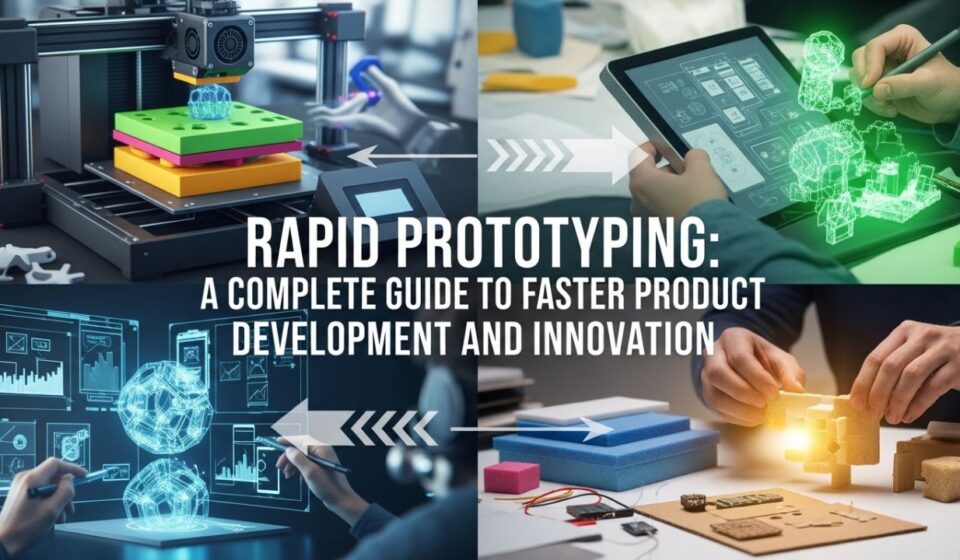

Rapid prototyping is a product development process used to quickly create a physical or digital model of a product, allowing designers, engineers, and businesses to test ideas before full-scale production. By developing prototypes in a short period, companies can identify design flaws, gather feedback, and make improvements early in the development cycle.
In today’s competitive market, rapid prototyping has become an essential tool for businesses seeking to reduce development costs, accelerate innovation, and bring products to market faster. From consumer electronics and automotive components to software applications and medical devices, rapid prototyping plays a crucial role in transforming concepts into functional products.
The Importance of Rapid Prototyping in Product Development
Rapid prototyping helps organizations validate ideas before investing significant resources in manufacturing. Traditional product development methods often require lengthy design and testing phases, which can increase costs and delay product launches.
By using rapid prototyping, teams can quickly visualize concepts, test functionality, and evaluate user experiences. This approach minimizes risks and ensures that products meet customer expectations before mass production begins.
Businesses that adopt rapid prototyping often gain a competitive advantage because they can respond more quickly to market demands and technological changes.
How Rapid Prototyping Works
The rapid prototyping process typically involves creating a prototype based on computer-aided design (CAD) models. Designers develop a digital representation of the product, which is then converted into a physical or virtual prototype.
Concept Development
The first stage of rapid prototyping begins with brainstorming and idea generation. Teams identify product requirements, customer needs, and design objectives before creating initial sketches or digital models.
Digital Design Creation
Engineers and designers use CAD software to develop detailed 3D models of the product. These digital files serve as the foundation for the prototype and allow teams to evaluate dimensions, functionality, and aesthetics.
Prototype Manufacturing
Once the design is finalized, the prototype is produced using rapid manufacturing techniques such as 3D printing, CNC machining, or injection molding. Depending on project requirements, prototypes may be functional, visual, or both.
Testing and Refinement
After production, the prototype undergoes testing to identify issues related to performance, usability, and durability. Feedback gathered during this phase helps improve the design before final manufacturing begins.
Types of Rapid Prototyping
Different forms of rapid prototyping are used depending on the goals of the project.
Visual Prototypes
Visual prototypes focus primarily on appearance rather than functionality. These models help stakeholders assess design elements such as shape, color, and overall aesthetics.
Functional Prototypes
Functional prototypes are designed to mimic the performance of the final product. They allow engineers to test mechanical components, user interactions, and operational features.
User Experience Prototypes
Commonly used in software development, user experience prototypes help designers evaluate navigation, workflows, and interface design before launching an application.
Proof-of-Concept Prototypes
Proof-of-concept models demonstrate whether a product idea is technically feasible. They are often used during the early stages of innovation to validate concepts.
Benefits of Rapid Prototyping
Rapid prototyping offers numerous advantages that make it a valuable part of modern product development.
Faster Development Cycles
One of the biggest benefits of rapid prototyping is speed. Teams can create and test prototypes in days rather than weeks or months, significantly shortening development timelines.
Reduced Costs
Identifying design flaws early prevents costly mistakes during production. Rapid prototyping helps businesses avoid expensive redesigns and manufacturing errors.
Improved Product Quality
By testing multiple iterations, developers can refine designs and enhance product performance. This results in higher-quality products that better meet customer expectations.
Enhanced Collaboration
Rapid prototypi ng encourages collaboration among designers, engineers, marketers, and stakeholders. Visual and functional models make it easier for teams to communicate ideas and provide feedback.
Better Customer Feedback
Prototypes allow businesses to gather user opinions before launching a product. Customer feedback helps identify potential improvements and increases the likelihood of market success.
Technologies Used
Several advanced technologies support rapid prot otyping across various industries.
3D Printing
3D printing is one of the most widely used rapid proto typing technologies. It creates physical objects layer by layer using materials such as plastic, resin, or metal.
CNC Machining
Computer Numerical Control (CNC) machining removes material from a solid block to create highly precise prototypes. It is commonly used for metal and industrial components.
Laser Cutting
Laser cutting technology enables rapid creation of detailed prototype parts from materials such as acrylic, wood, and metal sheets.
Virtual Prototyping
Virtual prototyping uses digital simulations to test product performance without creating physical models. This approach is especially valuable in software and engineering projects.
Applications
Rapid prototy ping is used across many industries due to its flexibility and efficiency.
Manufacturing Industry
Manufacturers use rapid prototyp ing to test product designs, improve production processes, and reduce development costs.
Healthcare Sector
Medical companies use rapid protot yping to create surgical models, medical devices, prosthetics, and customized healthcare solutions.
Automotive Industry
Automotive manufacturers rely on rapid prototyp ing to test vehicle components, improve aerodynamics, and accelerate innovation.
Software Development
In software development, rapid prototy ping helps create interactive wireframes and user interface designs for testing and refinement.
Consumer Electronics
Technology companies use rapid prototy ping to develop smartphones, wearable devices, and other electronic products before mass production.
Challenges
Despite its many benefits, rapid prototy ping has certain limitations.
Some prototypes may not accurately represent the final product’s materials or durability. Additionally, advanced prototyping technologies can require significant investment in equipment and expertise.
Organizations must also ensure that prototype testing is comprehensive enough to identify critical design issues before manufacturing begins.
The Future
The future of rapid prototyp ing is closely linked to advancements in artificial intelligence, automation, and additive manufacturing. New materials, faster 3D printers, and improved simulation tools are making the process more efficient than ever.
As industries continue to prioritize innovation and speed, rapid protot yping will remain a key driver of product development. Businesses that embrace these technologies will be better positioned to create high-quality products and adapt to changing market demands.
Conclusion
Rapid prototy ping has transformed the way products are designed, tested, and developed. By enabling faster iteration, reducing costs, and improving collaboration, it helps businesses bring innovative ideas to life more efficiently. Whether used in manufacturing, healthcare, software development, or consumer electronics, rapid prototypi ng continues to play a vital role in modern innovation.