

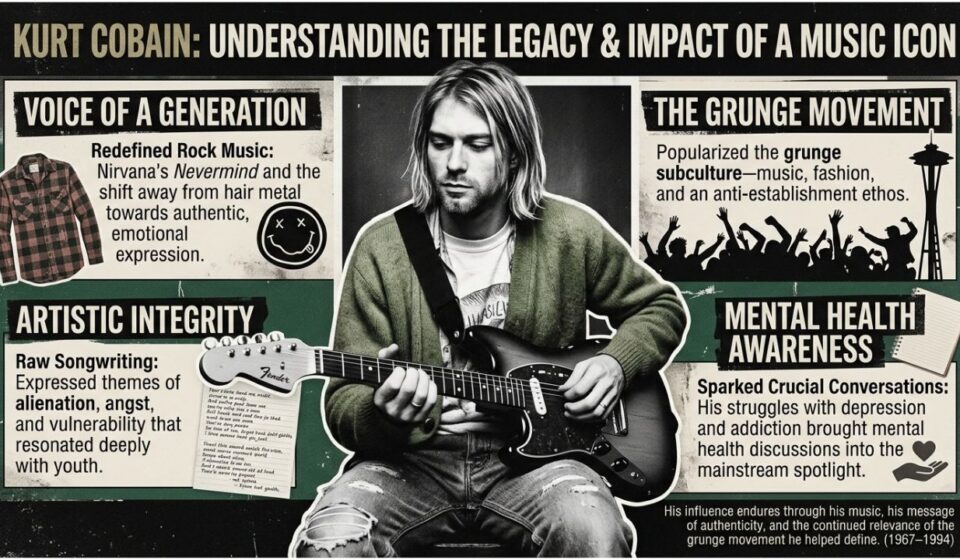

The topic of Kurt Cobain death remains one of the most discussed events in modern music history. As the lead singer, guitarist, and primary songwriter of Nirvana, Kurt Cobain became the voice of a generation during the rise of grunge music in the early 1990s. His talent, creativity, and influence transformed the rock music landscape, making him one of the most iconic musicians of his era. Even decades later, discussions surrounding Kurt Cobain death continue to capture the attention of fans, historians, and music enthusiasts around the world.
Who Was Kurt Cobain?
Kurt Cobain was born on February 20, 1967, in Aberdeen. From a young age, he showed a strong interest in art and music. His passion eventually led him to form the influential rock band Nirvana alongside Krist Novoselic.
The band’s breakthrough came with the release of the album Nevermind, which featured the hit song Smells Like Teen Spirit. The success of the album brought grunge music into the mainstream and established Cobain as an international star.
The Events Leading to Kurt Cobain Death
In the years leading up to Kurt Cobain death, the musician faced significant personal and professional challenges. The pressures of fame, intense media attention, and ongoing health struggles affected his well-being. Despite achieving remarkable success, Cobain often expressed discomfort with celebrity culture and the expectations placed upon him.
During the final years of his life, concerns about his physical and mental health became increasingly public. Friends, family members, and colleagues expressed worries about his condition, while fans closely followed developments in his career and personal life.
Kurt Cobain Death in 1994
The event known as Kurt Cobain death occurred in April 1994. Cobain was found deceased at his home in Seattle on April 8, 1994. Authorities determined that he had died several days earlier.
His death shocked the music industry and devastated millions of fans worldwide. News coverage dominated headlines, and tributes poured in from fellow musicians, artists, and admirers who recognized his immense influence on contemporary music.
The loss marked a defining moment in rock history and remains one of the most significant events associated with the grunge movement.
The Impact on the Music Industry
A Defining Moment for Grunge
The discussion of Kurt Cobain death is often linked to the broader story of grunge music. During the early 1990s, grunge emerged as a powerful cultural movement characterized by raw sound, emotional honesty, and alternative fashion.
Cobain became one of the genre’s most recognizable figures. Following his death, many fans viewed the event as a symbolic turning point for grunge, although the genre’s influence continued to shape music for years afterward.
Influence on Future Artists
Numerous musicians have cited Cobain as a major inspiration. His songwriting style, authenticity, and willingness to address personal emotions resonated with artists across multiple genres.
Even today, emerging performers study his work to better understand how he connected with audiences through meaningful lyrics and memorable melodies.
Why Kurt Cobain Remains Relevant
Timeless Music
One reason discussions about Kurt Cobain death continue is the enduring popularity of Nirvana’s music. Songs released during the band’s relatively short career remain widely listened to by new generations of fans.
Albums such as In Utero and Nevermind continue to receive critical acclaim and commercial success years after their release.
Cultural Influence
Cobain’s influence extends beyond music. His style, artistic vision, and perspective on fame have been widely examined in books, documentaries, and academic discussions.
Many people view him as a symbol of artistic authenticity and creative independence, qualities that continue to resonate with audiences around the world.
Public Interest and Ongoing Discussions
The circumstances surrounding Kurt Cobain death have generated ongoing public interest. Over the years, numerous books, documentaries, and investigative reports have explored various aspects of his life and legacy.
While official findings regarding his death have remained unchanged, public fascination with the subject continues. Historians, journalists, and fans frequently revisit the topic when examining the cultural significance of the 1990s music scene.
These discussions often focus not only on the event itself but also on Cobain’s artistic contributions and personal struggles.
The Legacy of Kurt Cobain
Musical Achievements
Cobain’s contributions to music remain substantial. Through Nirvana, he helped redefine rock music and introduced alternative sounds to mainstream audiences.
His songwriting combined powerful melodies with emotionally charged lyrics, creating songs that continue to connect with listeners decades later.
Lasting Fan Appreciation
Fans continue to celebrate Cobain’s work through tribute concerts, anniversary events, and online communities dedicated to preserving his legacy.
His influence can be seen in modern rock, alternative, and independent music, where artists continue to draw inspiration from his creative approach.
Recognition in Popular Culture
The story of Kurt Cobain has become a significant part of music history. His life and career are frequently referenced in documentaries, biographies, and discussions about influential artists.
This ongoing recognition reflects the lasting impact he had on both the music industry and popular culture.
Remembering Kurt Cobain Today
When people discuss Kurt Cobain death, they often do so in the context of remembering his artistry and influence. While his life ended at a young age, his work continues to inspire listeners around the globe.
Fans revisit his music not only because of its historical importance but also because of its emotional depth and timeless appeal. His songs remain relevant to individuals seeking authenticity, creativity, and meaningful artistic expression.
Conclusion
The story of Kurt Cobain death remains an important chapter in music history. As the frontman of Nirvana, Kurt Cobain helped shape a generation and transformed the direction of modern rock music. His passing in 1994 shocked fans worldwide, but his artistic legacy continues to endure.
Today, Cobain is remembered not only for the circumstances surrounding his death but also for the extraordinary music he created. His influence on rock culture, songwriting, and artistic expression ensures that his contributions will continue to be appreciated for generations to come.