


Antibiotics for septicaemia play a crucial role in the treatment of this life-threatening medical condition. Septicaemia, also commonly referred to as blood poisoning or sepsis in broader clinical terms, occurs when a severe infection enters the bloodstream and triggers a systemic inflammatory response. Without rapid medical intervention, the condition can lead to organ failure, septic shock, and death. In modern healthcare, early administration of appropriate antibiotics for septicaemia is considered the most important step in improving patient survival rates. The choice of antibiotics depends on the suspected source of infection, the patient’s medical history, and local bacterial resistance patterns. Because septicaemia progresses quickly, doctors often begin treatment even before laboratory results confirm the exact bacteria involved.
Antibiotics for Septicaemia: Understanding the Condition
Antibiotics for septicaemia are prescribed after understanding how the condition develops in the body. Septicaemia typically begins with a localized infection, such as pneumonia, urinary tract infection, abdominal infection, or skin infection. When bacteria enter the bloodstream, the immune system reacts aggressively, releasing chemicals that can cause widespread inflammation. This immune response can damage tissues and organs, reducing blood pressure and impairing circulation. If not treated promptly, the infection can escalate into severe sepsis or septic shock. Early recognition of symptoms such as fever, chills, rapid heartbeat, confusion, and difficulty breathing is essential. Because the condition can worsen within hours, immediate medical attention is critical.
Antibiotics for Septicaemia: Common Types Used in Treatment
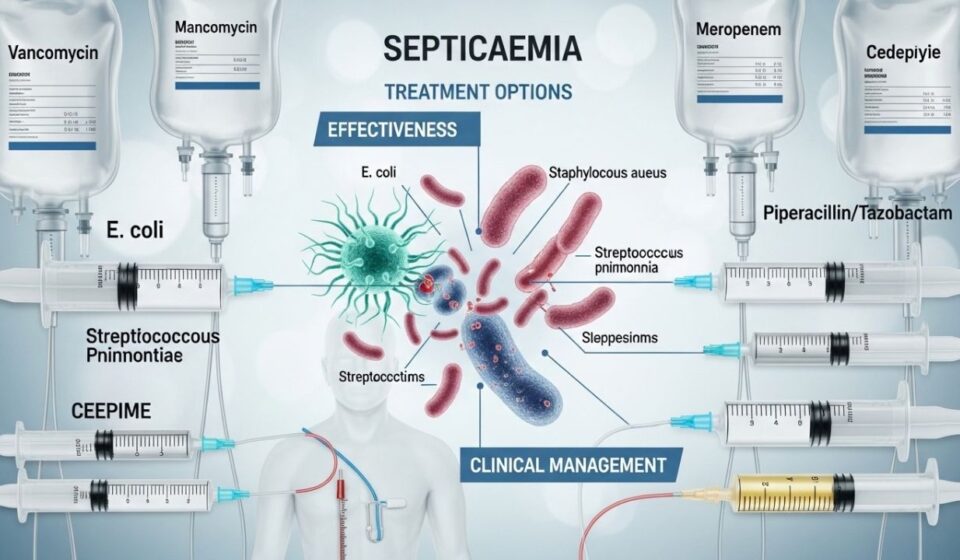
Antibiotics for septicaemia are usually broad-spectrum in the initial phase of treatment. Broad-spectrum antibiotics are effective against a wide range of bacteria and are used before the specific pathogen is identified. Commonly used options include piperacillin-tazobactam, ceftriaxone, meropenem, and vancomycin. These medications are often administered intravenously in hospital settings to ensure rapid absorption and effectiveness. Once laboratory tests identify the exact bacteria responsible, doctors may switch to more targeted antibiotics, a process known as de-escalation therapy. This approach helps reduce antibiotic resistance and minimizes side effects. The combination of antibiotics may also be used in severe cases to cover multiple possible bacterial sources simultaneously.
Antibiotics for Septicaemia: How Treatment is Administered
Antibiotics for septicaemia are typically given through intravenous infusion because oral medications may not act quickly enough in emergency situations. Treatment often begins immediately after blood samples are taken for culture tests, even before results are available. This is known as empirical therapy. In intensive care units, patients are closely monitored while receiving antibiotics to assess response to treatment. Fluid therapy, oxygen support, and vasopressor medications may also be required depending on the severity of the condition. The timing of antibiotic administration is extremely important, as delays can significantly increase the risk of complications and mortality. Doctors continuously adjust treatment based on clinical improvement and laboratory findings.
Antibiotics for Septicaemia: Factors Influencing Choice of Medication
Antibiotics for septicaemia are selected based on several important clinical factors. One of the most important considerations is the suspected source of infection. For example, infections originating in hospitals may involve more resistant bacteria, requiring stronger antibiotics. Patient-specific factors such as age, kidney function, liver health, and allergy history also influence drug selection. In addition, local antibiotic resistance patterns guide doctors in choosing the most effective treatment. In some cases, patients with weakened immune systems may require more aggressive antibiotic combinations. Pregnancy status and existing medical conditions are also taken into account. The goal is always to provide the most effective treatment while minimizing potential risks and side effects.
Antibiotics for Septicaemia: Role of Antibiotic Resistance
Antibiotics for septicaemia are becoming more challenging to manage due to the global rise in antibiotic resistance. Some bacteria have developed mechanisms to survive even the strongest available antibiotics, making infections harder to treat. This has led to increased use of last-resort antibiotics such as carbapenems and linezolid in severe cases. Overuse or misuse of antibiotics in the past has contributed significantly to this problem. In septicaemia cases, resistance can delay effective treatment and increase mortality risk. Hospitals now follow strict antibiotic stewardship programs to ensure responsible use of these drugs. These programs aim to balance effective treatment with long-term preservation of antibiotic effectiveness for future patients.
Antibiotics for Septicaemia: Supportive Care and Combined Treatment
Antibiotics for septicaemia are most effective when combined with supportive medical care. Supportive treatments include intravenous fluids to maintain blood pressure, oxygen therapy to support breathing, and medications to stabilize organ function. In severe cases, patients may require admission to the intensive care unit for close monitoring. Dialysis may be needed if kidney function is affected. Mechanical ventilation can also be necessary if respiratory failure occurs. The combination of antibiotics and supportive care significantly improves survival rates. Early intervention remains the most important factor in determining outcomes. Continuous monitoring helps doctors adjust treatment plans based on how the patient responds over time.
Antibiotics for Septicaemia: Prevention and Early Detection
Antibiotics for septicaemia are more effective when the condition is identified early. Preventing infections that lead to septicaemia is the best strategy. Proper hygiene, timely treatment of infections, wound care, and vaccination all play important roles in prevention. Hospitals follow strict infection control measures to reduce the risk of hospital-acquired infections. Early detection of sepsis symptoms can lead to faster antibiotic administration and better outcomes. Public awareness about seeking immediate medical help for persistent fever, confusion, or rapid deterioration is essential. In healthcare settings, sepsis screening tools help identify at-risk patients quickly, ensuring timely treatment.
Conclusion
Antibiotics for septicaemia remain the cornerstone of treatment for this serious and rapidly progressing condition. Early administration, appropriate drug selection, and continuous monitoring are essential for improving patient outcomes. While modern medicine has significantly improved survival rates, challenges such as antibiotic resistance and delayed diagnosis still exist. The most effective approach combines rapid antibiotic therapy with supportive care and preventive strategies. Strengthening healthcare systems, improving awareness, and promoting responsible antibiotic use are key to reducing the global burden of septicaemia in the future.