

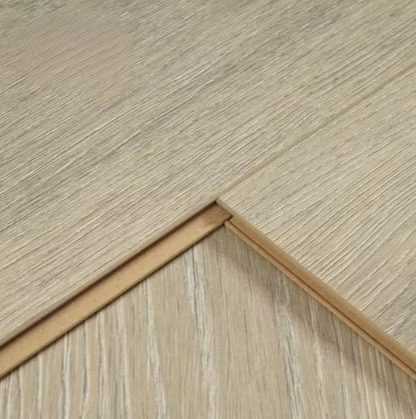

Selecting the right thickness for home materials often feels like a balancing act between cost and quality. You want something durable enough to handle daily life but affordable enough to stay within your budget. This is where the 8.3 mm measurement comes into play. While it might seem like a hyper-specific number, it has become a gold standard in the laminate flooring industry and certain precision engineering sectors. Understanding why this specific thickness exists helps you make better purchasing decisions for your next renovation or technical project.
The Anatomy of 8.3 mm Laminate Flooring
When you browse the aisles of a home improvement store, you see various thicknesses ranging from 6 mm to 12 mm. The 8.3 mm option occupies a unique position. It provides more stability than the entry-level 7 mm products without the high price tag of the premium 12 mm planks. But what exactly makes up those 8.3 millimeters? Typically, these planks consist of four distinct layers fused together through high-pressure heat.
- The Wear Layer: This top coating protects the floor from scratches, stains, and burns. It usually features a clear aluminum oxide finish.
- The Design Layer: A high-resolution photographic image of wood, stone, or tile that gives the floor its aesthetic appeal.
- The Core Layer: The heart of the plank, usually made of High-Density Fiberboard (HDF). In an 8.3 mm plank, this core is robust enough to prevent warping.
- The Backing Layer: A stabilizing layer that resists moisture and provides structural integrity.
Why the Extra 0.3 mm?
You might wonder why manufacturers don’t just stop at an even 8 mm. That extra 0.3 mm often represents the thickness of the decorative paper and the wear layer combined with the core. In the world of manufacturing, these fractions of a millimeter allow for tighter locking mechanisms. A slightly thicker profile ensures that the ‘click-lock’ system is deep enough to hold planks together under the pressure of heavy foot traffic. It creates a more secure bond that prevents the gaps often seen in thinner, cheaper alternatives.
Benefits of Choosing 8.3 mm Thickness
Choosing 8.3 mm flooring offers several practical advantages that impact both the installation process and the long-term enjoyment of your home. Because this thickness is so common, manufacturers have perfected the balance of materials used.
Enhanced Impact Resistance
Thinner floors, such as those at 6 mm, often feel hollow and can crack if a heavy object is dropped. The 8.3 mm profile provides enough density to absorb energy from impacts. This makes it an excellent choice for households with children or pets. The HDF core at this thickness is dense enough to resist indentations from heavy furniture legs while maintaining enough flexibility to handle slight subfloor imperfections.
Superior Sound Dampening
One common complaint about laminate is the ‘click-clack’ sound when walking in heels or hard-soled shoes. While an underlayment is always recommended, the inherent density of an 8.3 mm plank helps muffle sound better than thinner boards. It reduces the echo effect within the room and prevents noise from traveling to the floor below. When paired with a high-quality 2 mm or 3 mm underlayment, the acoustic performance rivals much thicker, more expensive flooring options.
Cost-to-Value Ratio
Budget is almost always a factor in home improvement. The 8.3 mm category is widely considered the ‘value king.’ You receive a product that feels substantial underfoot and lasts for 15 to 25 years, yet it costs significantly less than 12 mm luxury laminate. It is the ideal solution for large-scale projects where you need to cover hundreds of square feet without compromising on the visual appeal or structural reliability.
8.3 mm in Precision Engineering and Tools
Outside of the home renovation world, 8.3 mm is a vital measurement in mechanical engineering and tool manufacturing. In metric-based systems, this specific diameter often appears in drill bits, specialized fasteners, and automotive components.
Specialized Drill Bits
An 8.3 mm drill bit is frequently used for creating clearance holes for M8 bolts in certain tolerance classes. In engineering, a hole must often be slightly larger than the fastener passing through it to allow for thermal expansion or minor alignment adjustments. The size provides that perfect ‘medium fit’ for standard 8 mm hardware in industrial machinery.
Automotive Applications
In the automotive industry, precision is non-negotiable. Many internal engine components or sensor housings utilize 8.3 mm openings for specific O-rings and seals. Because the metric system allows for such granular accuracy, engineers use these fractional measurements to ensure airtight seals and fluid-mechanical efficiency. A difference of even 0.1 mm could result in a leak or a mechanical failure over time.
Installation Tips for 8.3 mm Products
Whether you are installing flooring or working with precision tools, handling 8.3 mm materials requires specific techniques. Following these steps ensures your project looks professional and lasts for years.
- Acclimation is Key: For flooring, let the 8 3 mm planks sit in the room for at least 48 hours. This allows the HDF core to adjust to the local humidity and temperature.
- Check Your Subfloor: While 8 3 mm is forgiving, the subfloor should be level within 3/16 of an inch over a 10-foot span. Use a leveling compound if necessary.
- Use the Right Underlayment: Don’t skip the underlayment. For 8.3 mm laminate, a moisture barrier is essential if installing over concrete.
- Expansion Gaps: Always leave a 1/4 inch to 3/8 inch gap around the perimeter of the room. Wood-based products expand and contract; the 8.3 mm thickness provides stability, but it still needs room to breathe.
- Tool Selection: If drilling 8.3 mm holes, use a drill press for maximum vertical accuracy. High-speed steel (HSS) bits are usually the best choice for this specific diameter in metalwork.
Comparing 8.3 mm to Other Popular Sizes
How does 8.3 mm stack up against the competition? Understanding these differences helps you decide if you should upgrade or save money.
8.3 mm vs. 12 mm
The 12 mm flooring is the ‘luxury’ choice. It feels exactly like solid hardwood. However, 12 mm is significantly heavier and harder to cut. If your subfloor is perfectly flat, the 8.3 mm version will perform nearly as well as the 12 mm at a fraction of the cost. The main reason to choose 12 mm over 8 3 mm is if you have severe subfloor dips or if you want the absolute highest level of sound insulation.
8.3 mm vs. 7 mm
There is a noticeable jump in quality from 7 mm to 8.3 mm. Most 7 mm floors use lower-density cores and thinner wear layers. They are prone to ‘peaking’ at the seams where the boards meet. The 8 3 mm thickness adds the necessary weight and locking depth to keep the floor flat and beautiful for many years longer than a 7 mm product.
The Role of AC Ratings
When shopping for 8.3 mm flooring, you will encounter the AC (Abrasion Criteria) rating. This rating tells you how much wear the surface can handle. Most 8 3 mm laminates fall into the AC3 or AC4 categories. AC3 is perfect for all residential areas, including high-traffic hallways. AC4 is durable enough for light commercial use, such as small offices or boutiques. Always check that your 8 3 mm choice has at least an AC3 rating to ensure it withstands daily life.
Maintenance and Longevity
To keep your 8.3 mm materials in top shape, minimal maintenance is required. For flooring, avoid using steam mops or excessive water, as moisture can seep into the HDF core and cause swelling. Instead, use a damp microfiber mop and a dedicated laminate cleaner. For engineering tools, keep 8 3 mm bits lightly oiled to prevent oxidation and maintain sharpness. High-quality 8.3 mm laminate can easily last two decades if you protect it from standing water and use furniture pads under heavy items.
Final Thoughts on the Versatility of 8.3 mm
The 8.3 mm measurement represents a masterclass in optimization. In the flooring industry, it provides the ideal bridge between affordability and long-term durability. It offers enough substance to feel premium underfoot while remaining thin enough to be easy to install and transport. In the world of engineering, it provides the precise tolerances necessary for mechanical harmony. Whether you are remodeling a living room or machining a custom part, 8 3 mm is a measurement you can trust. By choosing this specific size, you are opting for a proven standard that refuses to compromise on quality or value.
Frequently Asked Questions
Is 8.3 mm laminate flooring waterproof?
Standard 8.3 mm laminate is water-resistant but not fully waterproof. While the top wear layer protects against spills, water can damage the core if it sits in the seams. For bathrooms or laundry rooms, look for 8 3 mm products specifically labeled as ‘waterproof laminate,’ which feature treated edges and a more water-resistant core.
Can I install 8.3 mm flooring over existing tile?
Yes, you can install 8.3 mm laminate over tile as long as the tile is flat, secure, and level. You must use a high-quality underlayment to smooth out the grout lines. If the grout lines are particularly deep or wide, you may need to fill them with a floor leveler first to prevent the laminate from ‘telegraphing’ the pattern of the tile underneath.
What size drill bit is closest to 8.3 mm in inches?
The closest fractional inch measurement to 8.3 mm is 21/64 inches, which is approximately 8 dot 334 mm. If you are working on a project that requires an 8 3 mm hole and only have imperial tools, a 21/64 bit is your best substitute, though it will be slightly larger by about 0.034 mm.